Showing posts with label benefit cuts. Show all posts

Tuesday, 20 January 2015

Benefit Cuts for People with Depression Who Refuse Treatment Are Barbaric and Misunderstand the Problem

According to the Express, the DWP is planning to cut benefits for people with depression or anxiety who refuse treatment.
A senior Government source said it was “bizarre” that a lot of ESA claimants with treatable mental health problems undergo no treatment whatsoever, according to the Sunday Telegraph.
“These are areas we need to explore. The taxpayer has committed a lot of money but the idea was never to sustain them for years and years on benefit. We think it’s time for a rethink,” the source said. 
“At some point something has to be done. Right now it’s an open ended contract.”
This is a seriously misguided policy, for several reasons:

1) It assumes that everybody with these conditions will respond positively to treatment. Having been under treatment of one kind or another for mental health problems for more than half my life, I can say with some authority that finding the right treatment is usually a combination of luck, experimentation and circumstance. Many people go through a range of anti-depressants, for instance, at a range of different doses, before they find the one that actually helps (and doesn't make things worse). If they find one that helps at all.

Many people aren't willing to go through the plethora of unpleasant side effects and repeated disappointment that are associated with trying yet another pill, and they shouldn't be punished for this.

Similarly with therapies; some are suitable for some conditions and some people, others are entirely inappropriate. 

2) This policy assumes that treatment is available for everybody. A whole lot of people who have tried to get 'talking therapy' treatments find they are unavailable, or they have a loooooooong waiting list that they won't ever reach the top of. 

3) We need to retain absolute autonomy over our bodies and our minds, and that includes having a choice over taking pills or letting professionals prod into our psyches. There are many, many good reasons that people may resist interventions, including having faced force or increased oppression in their previous experiences with mental health services. Forcing people into this system - especially if it has already let them or their loved ones down - will do far more harm than good.

4) No therapy or counselling will work if, for whatever reason, the client hates the idea. It just won't. 

This is a policy that is not only wrong-headed, it risks doing further harm to people who are already vulnerable. Cutting someone's financial lifeline because they can't bear to try yet another tablet or because they're scared to undergo counselling after their last counsellor was transphobic or tried to cure them of their gayness, or simply because they don't feel ready to face the issues that trouble them, is barbaric. 

Tuesday, 2 April 2013

Overheard in the Waiting Room


This morning, I took a pair of gruesomely infected toes to the doctor's. During the long wait, I politely eavesdropped on a conversation between three friends who had bumped into each other (that is, they had met by accident; they weren't seeking medical help having violently collided). I would guess that they were around retirement age, or maybe a little younger, two women and a man; ordinary folks. They competed as to whose winter coat had lasted longest, discussed Strictly Come Dancing and expressed some nostalgia for The News of the World before it went trashy.

Then they had a conversation, which went something like this:

A: Of course, all these cuts have just come in, haven't they? A lot of people are going to be struggling.
B: Oh yes. It's not fair that the poorest people should have to pay when it's the bankers who got us into this mess.
C: I know. It's only going to cause the country trouble in the long run, making people so badly off.
A: But there are some people swinging the lead.
B: That's for sure. You hear a lot about disability fraud.
C: Yeah and everybody knows somebody, don't they? Someone who's working the system.
A: But there's a lot of propaganda about that, I think.
B: Of course, the government want you to think they're all the same.
C: You can't believe anything you hear, that's for sure - especially not from this lot!

It went round like this, several times, sometimes with specific anecdotes or particular stories they had seen on the television and in newspapers. At one point, there was a very nuanced discussion of workfare (although they didn't use that term), which talked about the difficulties someone might have if they had depression, would benefit from work and might sign up for one of these schemes, only to get in trouble when they struggled to get out of bed in the morning and were late for their placement. Because people with depression can have trouble getting out of bed in the morning, however hard working and enthusiastic they are.

But time and again the same sentiments were repeated:

  1. Some people are on the scrounge for sure. 
  2. Some people are really suffering.
  3. You can't believe anything your hear.

This disbelief was extended across the board. At one point the conversation shifted from a discussion of just how difficult it was going to be for some people - just how little money people would be left to live on - to the "scare-mongering" about how difficult it was all going to be.

And this is the trouble we have; the position that ordinarily apolitical people who are not directly affected by the cuts have been placed in. They don't trust what they hear - least of all from politicians. They care about the fact that people are being left with little to live on, and the removal of crisis safety-nets like the Social Fund and Legal Aid for civil cases. But, weighing the balance of everything they've been told, they feel that there's a fair amount of cheating going on and that needs to be stopped.

Most people I speak to, outside of disabled, poor or otherwise politically active types, feel the same. They support Welfare Reform in principle (and why not? Few people feel there's no room for improvement), they are anxious about how this effects vulnerable people in practice (People like you). But they don't know what the answers are and they feel that everyone who has a voice in the public sphere is probably lying to them.

I don't know what the answers are, but I wonder if this conversation is about to change. Although there's more to come, a lot of the cuts which came into place on Monday have been a long time coming, and the real life consequences have been - while reasonably speculated about - as yet uncertain. Now it's happening. The poorest people are poorer than they've been for many years. There are many more of them.

And maybe there's some optimism to be taken from the fact that people are confused. A few years ago, when the scrounger rhetoric had just got underway, I think the friends' conversation would be less balanced. The deserving poor would have been spoken about as rare exceptions, as opposed to "many".

See Also: John Harris: We have to talk about why some people agree with benefit cuts.

Sunday, 24 June 2012

Local Housing Allowance Cuts & The Idealised Family


This is a Daily Mail link, thus the succinct and witty title:
Cameron to axe housing benefits for feckless under 25s in war on wellfare culture
Or as I would have put it: Under-25s to be denied Local Housing Allowance. Maybe.

The Conservative Government have an idealised view of normal families being wealthy, upper middle class, living in large houses with plenty of space, where everyone gets on well, everyone works and spends time outside the house and parents are committed to providing for their offspring for as long as it takes for them to get on their feet. Getting on their feet, in the mind of David Cameron, seems to mean saving up to buy a house (a neat trick at the best of times, let alone when you're poor enough to be on benefits).

I know a lot of nice families. I don't know any families like that.

My parents are great, but they didn't see parenthood as a lifelong financial burden and expected my sister and I to be independent. I started paying rent (though admittedly not much) at sixteen and moved out at eighteen. They helped my sister through university to the best of their ability but have provided no further financial assistance to either of us since. They are generous with their time and energy, I get Christmas presents I couldn't afford to treat myself to, but as far as they are concerned, they've done their bit.

By the time I was eighteen, I couldn't stand living with them any more. They were not abusive. They weren't terrible about my illness, but they weren't coping with it at all well, at a time when I wasn't coping with it at all. They struggled to see me suffer and half the time they treated me like an infant, while half the time they kept their distance and made it difficult to ask for help. They were, at that time, fantastically homophobic*. Both of them were also under a fair amount of personal stress; Mum's father had died the previous year, Dad was unemployed and I was frequently caught up in the middle of their arguments. And this was making me ill. It wasn't the only thing making me ill, but it was a big contributing factor to the suicidal depression that took hold.

As it was, I met a thirty-four year old man who took advantage of my considerable vulnerability - including my housing situation - and whisked me off to the other end of the country. This seemed like a really good thing at the time; I had a rock bottom self-esteem and was used to being treated like a child, so I wasn't able to identify verbal abuse, controlling behaviour or even the violence for what it was. What's more, being sent home to my parents in humiliation was used as a constant threat and since I couldn't live by myself, I felt this was my only other option. It was only much later, when I realised that I had friends and several family members who would be prepared to provide refuge should I need it, that I was finally able to leave.

I needed to move out when I was in my late teens. A change in legislation wouldn't have stopped my story happening, but it would remove a vital option from other young disabled women (and women who are poor for other reasons). Young and vulnerable women without any option of independent housing are going to be even more vulnerable to older abusers who don't have to work too hard to seem a more attractive option than staying with Mum & Dad.

The difficulties of living with parents are exaggerated for disabled people - folks who find it easy to live with their parents are usually extremely independent, able to go out whenever they like and only pop home to sleep off the hangover. When you're at home most of the time, need meals cooking, let alone help with bathing and so forth, there's far more pressure on that relationship. Some parents of disabled people are so used to being anxious about and protective of their kids that they take a long time to realise that their children have grown up. If indeed, they ever do.

That was my situation, but there are myriad other reasons that young people cannot live with their parents, apart from obvious things like having no parents or having terrible parents (who are by no means restricted to parents who beat you up - one exceptional circumstance the article acknowledged). These include

  • Parents live in a house too small to accommodate you, e.g. they've got a smaller house now, Gran's moved into your old bedroom or you'd have to share a room with two five-year-olds and a budgie named Elvis.
  • Parents' house is physically inaccessible. 
  • Parents' house is an unhealthy environment for you - I had one young friend with ME who wound up in a hostel because the noise and chaos of her multiple younger siblings made it impossible for her to get sufficient rest.
  • Parents make it difficult to be yourself in some way (e.g. they disapprove of your sexuality, religion or lack thereof).
  • Parents live in a completely different part of the country to where the young person lives and works. Not only it is perfectly reasonable that young adults move to other parts of the country, for studying, work or because somewhere is more suited to them, but it is even more reasonable that young people shouldn't have to move back - or indeed follow their parents around the country - if something goes wrong. You might have begun to establish a career in London, only to be unemployed at the age of twenty-four, and rather than staying in London while you find a new job, you have to return to Orkney where it is impossible to apply for London jobs.
When I was twenty-nine, I was forced to move back in with my parents. This situation changed soon after and I now live less than half my time with my own folks and the rest of the time with my boyfriend's parents - who are, in fairness, somewhat closer to Cameron's ideal, only without having any money to spare. 

However, my parents struggled with this. They wanted to help, because I'd found myself in very insecure accommodation where I didn't have access to freezer space or a functional washing machine, let alone the help I needed. But they didn't understand why I couldn't get social housing with a snap of my fingers and move out again right away. They couldn't understand that Local Housing Allowance wouldn't pay full rent on any suitable place I might want to live - in fact, it wouldn't pay for any place I could reasonably live, such that I could afford to eat as well, in this not at all posh part of rural Suffolk.

My parents house is inaccessible, and while folk in other areas of the country can't get the basics, I've had to turn down all kinds of adaptations from social services because this is not my house and my folks don't want the place looking like a nursing home. They would never consider getting a vehicle that could transport my power chair, so I can't get out much while I'm with them and have to ask my boyfriend's Dad to help me on most significant journeys. And apart from all that, it's been a struggle. Not an insurmountable one, but a struggle, nevertheless.

This is a normal family. Some people reading this might judge my parents badly, but others will know how lucky I am that I've got a comfy room and a roof here and get on with them well enough that this is okay for now - especially as I don't have to be here all the time. But there is nothing remarkable about my situation or the attitudes of my folks. They love me and they have done their best for me. Even if they were to be judged badly for that, it's not something I - let alone my desperate eighteen year old self - have ever had any control over.  


* They weren't as bad as all that, really, but I love my parents, and when I think about things they said then, when I was having come to terms with my sexuality in secret, I find it very shocking and hurtful. However, I know they could have been worse, and if they'd found out about my sexuality then, they probably would have dismissed it as an abhorrent phase  as opposed to throwing me out or anything nearly so dramatic.

Tuesday, 17 April 2012

Guest post: Personal Independence Payment – The Next Great Welfare Train Crash

This is a guest post from @johnnyvoid and originally appeared here.

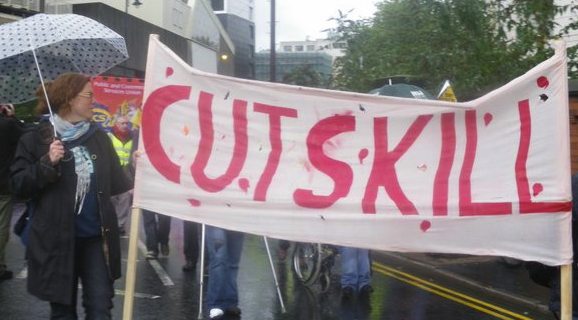
Banner with 'cuts kill' painted on in red
Brutality combined with incompetence are becoming the hallmark of the current Tory administration and the plans to abolish Disability Living Allowance (DLA) are riddled with both. The Government is driving ahead with their plans to replace DLA with the new Personal Independent Payment (PIP). The aim of this is to strip benefits from a fifth of disabled people.

This will be achieved by using an independent medical assessment as the key part of the decision making process when considering a claim for the new benefit. That assessment will be carried out by a private company.

We already have an effective model of how the new scheme might operate. The Work Capability Assessment (WCA) is a short computer test carried out by French IT firm Atos which is used to determine eligibility for the out of work sickness and disability benefit Employment Support Allowance. For everyone other the Government and Atos themselves, it has been an unmitigated disaster. The constant assessment and re-assessment regime has driven an increasing number of people to take their own lives. A recent Daily Mirror investigation found that 32 people a week die after being declared ‘fit for work’ by Atos. Around 40% of appeals against Atos’ decisions are successful and the appeals system is in meltdown due to the number of cases being brought.

Despite some tampering around the edges due to a recent review of the process, there are no plans to abolish or significantly reform the WCA. This should serve as a stark warning to people facing the new PIP testing regime. The Government are happy with Atos the way things are. Lots of people are losing their benefits. That was always all they wanted.

The stated agenda of PIP is to remove benefits from 20% of disabled people. All other mealy mouthed attempts at reform are secondary to this. It will be down to the private sector to carry out this cull. In many ways the PIP process will be identical to the WCA. It may yet even be Atos who carry out the assessments.

This will not only prove traumatic for the people forced to undergo demeaning health tests, but will bring devastating social costs. The Government’s plan that “entitlement will depend on the person’s circumstances and the impact of their health condition or disability on their everyday lives” is vague and open to all kinds of interpretation.

How it will be measured in practice is anyone’s guess. Given it’s the private sector who will be carrying out the bulk of the work the answer is likely to be the cheapest way possible. It will be difficult to imagine how, for example, being in full time work can be ignored by any assessment. Under the WCA claimants who have admitted to watching Eastenders have had it used against them as evidence of being ‘fit to work’. It is therefore very likely that having a job will come to be seen as a disqualifying criteria for claiming PIP, if not formally but as a reality of people’s experiences. This may not be the Government’s intention, but in practice it seems unavoidable.

Atos, as well as human rights abusers G4s and private sector sharks Serco, are some of the companies believed to be bidding for the PIP contract. They should be warned it is a thoroughly poisoned chalice. Atos have already seen their reputation destroyed by the WCA, with the name of their company becoming a dirty word. This will seem trivial should they take on the PIP Assessments.

DLA is a non means tested benefit designed to help people meet the additional costs of disability or ill health. In many ways it should be seen as an adjunct to the NHS rather than a benefit comparable to those paid to people unable to work. DLA is used for things like additional transportation costs, specialist equipment or personal care. For many working disabled people these things are essential to help them remain in work. As Disability Rights UK have recently pointed out (PDF), the removal of DLA from over half a million people may drive many into unemployment.

People currently claiming DLA include doctors, lawyers, journalists and MPs. Whilst those claiming out of work benefits are by their very nature economically disempowered (in that they don’t have jobs and are forced into the poverty of the benefits system) many DLA claimants are highly skilled professionals. We could face the unedifying spectacle of Doctors having their health and disability needs assessed by the two bit NHS rejects at Atos. Disabled legal professionals may yet be forced into the appeals system and are likely to prove ferocious. Any company which takes on the PIP contract will face unprecedented resistance at grass roots level, from people in some cases far more qualified than their own assessors. It will be doctors, lawyers and journalists lining up alongside benefit claimants to take action against the companies concerned.

Imagine becoming public enemy number for not just the three million plus DLA claimants, but their friends, families and carers. People with many more skills and resources to fight than those on out of work benefits. Every mistake, appeal or careless remark by an assessor will be scrutinised. Assessment centres and other business sites could find themselves thronged with disabled protesters. An avalanche of legal challenges seems almost inevitable.

It is possible that on the ground a two tier process will develop. Disabled doctors and lawyers may be informally waved through the process in the hope they won’t make too much fuss. Can we honestly believe that David Blunkett or a Paralympian Gold Medal winner will face the same kind of scrutiny as an out of work disabled single mum living on a Council Estate?

The alternative is that the PIP assessment will become an unofficial ‘means test’. Those in work, or able to lead more active lives, may find themselves punished as any sign of independence is used against them. However the upcoming farce plays out it will prove catastrophic not just for disabled people themselves but for the wider credibility of the system.

As we have seen under the WCA regime, there will be more suicides, more appeals and more people having conditions made worse by the stress of endless testing. The Government says that only in very few cases will PIP be awarded for life. This will mean for example, that people who may have lost a limb will be forced back to continual re-assessments, presumably to check it hasn’t sneakily grown back.

Despite lurid headlines DLA is not an easy benefit to qualify for. A wealth of medical information is required, from GPs, consultants and other health professionals. As with the WCA, this is likely to become secondary to the short assessments carried out by private companies. As more disabled people are forced into poverty it will be down to Local Authorities and the NHS to pick up the slack. Just like so much of this Government’s Welfare Reform, it may yet cost more money to go down this road than simply leaving things as they are.

The Government are currently consulting on the changes and you can make your feelings heard here. If past consultations are anything to go by then don’t expect them to listen. The over privileged tory toffs have made their intentions well and truly clear. Don’t think that this scum will shed any tears for those driven into poverty or even suicide by these changes. As Maria Miller, the Minister for Disabled People has already said, the cost of disabled people is simply ‘unsustainable’. That tells us everything we need to know about this Government’s attitudes towards sickness and disability.

Join the growing protests against Welfare Reform including action called in Central London by Disabled People Against Cuts on the 18th April (tomorrow!).

Monday, 2 April 2012

♫...Let me take you by the hand and lead you through the streets of London; I'll show you something to make you change your mind. ...♫

Visit any American city and it's unlikely you'll get to the end of your first day before you've seen a rough-sleeping wheelchair user. Most seem to sleep in that awkward contorted position usually reserved for trying to sleep on a plane, though I have seen people try and achieve some semblance of horizontalness by laying with their head and upper torso on their chair seat and their butt and legs on a bench or low wall. That's the wheelchair users that haven't had their legs blown off in service of their country, of course. I'm assuming that if you laid down on the floor to sleep in a doorway that your essential mobility aid wouldn't still be next to you in the morning.

The first time I went to America it really shocked me. I'd never seen a wheelchair user sleeping rough in the UK. My parents explained that it's because our health service and welfare state were less brutal than there and we don't tend to leave wheelchair users destitute. I was 11 when I went on that trip and the only thing I'd known was Thatcherism: She was elected as PM 13 days before I was born and in October 1990 when I left this island for the first time she was still a month short of handing the reins over to Major.

Our system has always failed people with mental health and substance abuse problems and they make up a significant proportion of our rough sleepers. Wheelchair users aren't immune from ending up without a home to call their own - especially down to the fact that accessible housing is in such short supply - but we tend to end up as hidden homeless rather than living on the streets.

For 21 years since that first trip to America it remained the case that I never saw a wheelchair user sleeping rough in Britain.

As more and more applications for disability benefits are turned down disabled people are finding it increasingly hard to make ends meet. Things will get worse in the near future when people in WRAG claiming cESA start to lose their income, and yet worse still in little over a year when half a million genuinely disabled people lose their DLA.

The fact that cuts are already starting to bite can be seen on the streets of London: Over the last few months I've seen 3 different wheelchair users hunkering down for the night on the streets of my city.

Welcome to compassionate Conservatism: Even more brutal than Thatcher.

Wednesday, 25 January 2012

And in the news...

The BBC today published a news story on their website about right-to-die campaigner Debbie Purdy, her husband, and the benefits system.

Husband of Debbie Purdy told 'quit work' for benefits.

It's a ridiculous situation, it shouldn't happen, but it does. It's the final paragraph that really irritated me:

The Department for Work and Pensions said it did not comment on individual cases but that planned reforms of the welfare system would benefit people such as Ms Purdy.

In the first half of the sentence the DWP say "we don't comment on individual cases." This is then followed in the second half of the sentence by commenting on an individual case. My cat is more consistent than the average DWP employee and she frequently demands to be petted and then bites me when I touch her.

There's also the problem that the second half of the sentence is a complete lie. Yes, the government are resolving the problem that one can sometimes be better off on benefits than in work. But they're not resolving the problem by improving benefits for families like Purdy's: They're just making everybody poorer.

Many of the benefits to be capped, including housing benefit, are available to people in work on low incomes. By cutting back on these benefits you're making remaining in work harder not easier.

The article says that Purdy gets IB and DLA. DLA is being subjected to 20% cuts and many genuinely ill people are being found fit for work in the IB to ESA moves. Right there is another possibility that these reforms might leave Purdy worse off.

Whenever there's a benefit-related news story the DWP are always given a right-to-reply in which they invariably tell a pack of lies. So why is it that when the right wing press - which unfortunately has to include BBC News these days - run a story straight from the mouths of the DWP that disabled people don't get the same right?

Saturday, 9 July 2011

The worst kind of postcode lottery

The DWP published a press release yesterday, reinforcing the status of benefit claimants as primarily suspected criminals. Titled Cheats warned of benefit fraud blitz, it describes how claimants who live in "high risk postcodes" will be scrutinised, "regardless of age, gender, ethnic make-up, type of benefit recipient, income, disability breakdown or family status".

The lucky claimants in Birmingham's B44 postcode, the Perry Barr and Kingstanding area, will be the first to receive the Mobile Regional Taskforce. Yet again, benefit claimants are automatically under suspicion, simply because they are unlucky enough to have to rely on government money, and now because they live in certain postcode areas.

It does not explain what makes a particular postcode 'high risk', but I would imagine they are made up of areas which are more deprived, with higher numbers of people already living in poverty. So, the more likely you are to need government support, the more under suspicion you are?

Benefit claimants are not criminals! While finding people who are committing fraud on a huge scale is clearly important, this move just reinforces the propaganda coming freely from the government and certain parts of the media that we are all ripping off 'the taxpayer' and need hunting down and prosecuting. It increases people's anger at us, and our fear at our situation, over which we have no control.

(Cross-posted at incurable hippie blog).

Tuesday, 21 June 2011

Another case of the human cost of benefit cuts

I've written before about the deaths of Paul Reekie and Christelle Pardo. But as right-wingers keep pointing out, those two both killed themselves before the cuts were rolled out. Of course most people can see that if people have killed themselves as a result of losing their benefits, even if it was before the austerity agenda, that it's a cautionary tale against attacking disabled people's meagre incomes.

But, still, there are some that assert that the suicides of Reekie and Pardo have no relevance to the cuts whatsoever.

Sadly the proof that cuts kill has arrived: 33 year old Paul Willcoxson who had mental health problems killed himself because he was so worried about benefit cuts.

A suicide letter and next of kin note were found in which he expressed concerns about Government cuts, Southampton Coroner’s Court heard.

Such a sad event. My thoughts go out to Willcoxson's friends and family.

Related: Someone wrote to DPAC explaining how difficulty claiming benefits was a factor in their sister's suicide.

Wednesday, 15 June 2011

It's never that simple

As readers of this blog are no doubt aware, yesterday Labour leader Ed Miliband made a speech attacking those disabled people who he believes can and should be doing some sort of (unspecified) work.

So far as anyone can ascertain, Mr Miliband doesn't have any basis for this belief - no background in Occupational Therapy, no medical qualifications - it goes right back to the old refrain of "if you can press a button, you can work," that we heard many times while Labour were in power and introducing ESA and their harsh Work Capability Assessment.

As I responded to Bendygirl's blogpost yesterday: it's never that simple.

If there is a button-pushing factory in my town (despite offshoring), or in a town I could move to (despite lack of accessible housing and the housing benefit caps), and if they're hiring (despite record UK unemployment), and if I can get up and washed and dressed in the morning (despite cutbacks to Social Services), and if I can actually get to work (despite inaccessibility of public transport), and if the button-pushing workstation and the route to it is or can be made accessible (despite Access to Work cuts)...

...and if the bosses and co-workers are happy to accommodate my need for frequent breaks at unpredictable moments (despite the hundreds of other applicants for the button-pushing job who are equally qualified for button-pushing and don't need breaks or adjustments), and if I will earn a living wage (despite the messing about with Tax Credits)...

...and if we can account for the fact that I only have the energy to function for about 10 non-contiguous hours out of every 24 and I must keep three or four hours of that aside for necessary things like eating, medicating, grocery shopping, banking, cleaning and managing my household, and the bureaucratic maze of disability...

...then I, along with many others, will be right there.

Wednesday, 11 May 2011

Conversations with my cab driver

I'm going to write a big old post about the Hardest Hit march and rally filled with photos in a little while. I got a taxi home from the event and I wanted to share the conversation I had with my cab driver:

  1. Before I forget the details.
  2. Because I think it deserves its own post separate from the main write-up about the events of the day.

I know some people who take a lot of taxis and always strike up a conversation with the driver. I rarely take taxis because I can't afford them. And even when I do I don't tend to talk to the driver because I'm awful at striking up conversations with strangers.

But today I overheard the driver talking on the phone in which he said "I didn't see any demonstration. I don't know what they were demonstrating about..."

So once he got off the phone I explained that the demonstration had been a bit earlier but it was over now and the roads had all reopened. And that it was a protest against the cuts to disability benefits.

"But if you get, say, £100 a week, they're not gonna cut that down to £70 though, are they?"

I explained that actually the planned cuts were much more brutal than that. He still didn't seem to quite accept when I explained just how cruelly disabled people were being treated. He just couldn't comprehend that our government could really do that to disabled people.

"Now, you see, the trouble is is all these fakers."

I tried to tell him that the official fraud rate for IB is around 1% (see page 8 of this DWP report), but on this he just wouldn't believe me. He insisted that there are fraudulent IB claimants everywhere.

I tried to explain that most people have a story of the time they met a faker. The government acknowledges that one in every 100 IB claimants is a fraud. But those other 99 are people he's less likely to meet. The other 99 will include people who are housebound or can't afford to go out and take taxis. The 1% who are fakers might be more visible than the 99% of genuine claimants, but that doesn't mean that they account for any more than 1%. He refused to accept this.

"But why do you believe that it's only 1%?"

The conversation got quite difficult for me here because he made it out to be a matter of religious-type belief. I tried to explain that the 1% figure are the government's official statistics but he wouldn't concede they were "right", he was only willing to accept that I believed them, but he chose to believe the tabloid-ised stats.

"I mean people in wheelchairs and that are obviously genuine, but I think a lot are fakers."

This turned out to be a simple claim to refute when he revealed that he had spondylosis and he found even walking short distances to be painful. He was perfectly willing to accept that some people have conditions that you can't see because he has one himself. I think his statement purely came from repeating sentiments he'd read in the tabloids but had never really thought much about.

But this did lead on to:

"Well I work and pay taxes so I don't see why I should be paying for benefits for people who could work."

We were stopped at some traffic lights about 100 metres from the end of my journey so sadly I didn't have time to address the "well I'm disabled and I work so why can't other people?" subtextual element to the question.

But what I did have time to explain was DLA. I explained that DLA was a benefit that disabled people could get for help with getting around and help with care. And that the benefit wasn't affected by your employment status because if you find a job your need to buy a wheelchair or your need for help getting out of bed in the morning doesn't go away.

I had to explain that the government and the media, in their attempts to whip up hatred towards disabled people, keep claiming that DLA is an "out of work" benefit. So despite what you might read in the papers there are some people who have a job and get benefits, but aren't getting those benefits fraudulently. He seemed to think that, actually, DLA was a really good idea.

Alas my journey ended here. It was quite a shocking conversation for me because it really drove home just much people believe the lies printed in the papers. He seemed like a genuinely nice bloke; I mean he pulled his cab over to pick up a wheelchair user which most cabbies won't so that's a fair indicator of his decentness. But for so long he's been fed these stories that there's a huge problem with people claiming benefits fraudulently that he now believes it and won't accept when just one person points out the facts to him because it's a lone voice in the face of all this propaganda. And so many times he's heard that "the most vulnerable will be protected" that he can't quite grasp that that's not true either.

The fare came to £11.40. He would only let me pay £7.

Tuesday, 10 May 2011

Hardest Hit Demo: Pros and Cons.

Tomorrow will see the Hardest Hit campaign against the cuts action in London. It is an opportunity to protest the cuts which will affect disabled people so devastatingly, and join together with other disabled activists.

If you can't make it to the march, for whatever reason, you can protest online and there is also a really good guide for writing to your MP.

Full details of the route, and frequently asked questions have been made available, and they have also created a flickr group, a twitter list and a facebook page, tuning in well to the influence of social media in recent protests and campaigns. Hardest Hit is also including lobbying MPs about the Welfare Reform Bill into the protest, which can also make a palpable difference to the situation of disabled people in Britain.

Hardest Hit has the potential to be a huge and important event for increasing visibility of the issues facing disabled people during these so-called 'times of austerity', and the involvement of several big charities may increase the likelihood of media interest. At a time when disabled people are being constantly vilified in the right-wing press, raising awareness of the issues we face could begin to change perceptions and increase support for disabled people in Britain.

The whole of the Where's the Benefit? is dedicated to talking about why the welfare cuts are not only demeaning but downright dangerous, and it would be wrong of us not to mention Hardest Hit. However, not everyone on the team, myself included, feel we can fully get behind the demonstration.

Some of the big charities and organisations involved in organising the Hardest Hit campaign are ones which, historically at least, have been a part of the oppression of disabled people. Disabled People Against Cuts have publicly withdrawn their support of the demo, saying,
Do we ignore the fact that organisations might be viewing disabled people as ‘helpless cripples’ so long as they are prepared to come out and oppose the cuts? We believe it is precisely because we are facing severe attacks upon our rights and lives at this moment in time that there is even more reason than ever to ensure that the messages we’re sending out and the actions we take are clear and work in the long term best interest of all disabled people. I make no apology for saying that DPAC refuses to “turn a blind eye” and betray certain groups of disabled people for some mythical “greater good”. Some may accuse us of cutting off our noses to spite our face or needlessly creating barriers where none exist, however, it is our view that it would be hypocritical of DPAC to speak of defending people’s rights, including the right to independent living and self-determination, if we gave a nod and a wink to anyone who is engaged in activity undermining these rights.
Other concerns involve the motives of the charities. Miss Dennis Queen writes,
When campaign success is going to happen you can count on these charities use their plentiful resources to to sweep in and be there to help government 'resolve' the anger, fear and penalties disabled people face. They get to sit at the table with Government and make sure THEIR business interests get served first, not the interests of disabled people. They take control of matters for government, claiming to be the people who represent disabled people and 'look after us' so nobody else need get bogged down in the detail.
A post I wrote last December talked about Disability Works UK, who were bidding for contracts to carry out the Government's compulsory back-to-work schemes. Disability Works UK is made up of 9 disability charities and organisations. 4 of these (Mind, Mencap, Scope and Leonard Cheshire Disability) are listed as supporters of Hardest Hit. I find it hard to understand how they can support a campaign against the cuts, while seeking to profit from the legislation that will result. Would we support a march organised by ATOS or A4e?

But the aspect which caused perhaps the most concern was the announcement that Maria Miller had been asked to speak. Maria Miller is the Minister for Disabled People, and she is fully behind the disability benefit cuts. She has, unsurprisingly, turned down the invitation to speak at Hardest Hit, but the fact that she was invited in the first place poses yet more questions about the motivations of the march's organisers.

There is always a fear that it is wrong for us to show disunity in public. Will people use that to discredit the movement as a whole, or the good done by parts of it? It's possible, but I also believe that we are doing ourselves a disservice if we do not speak up about what concerns and hurts us.

Where's the Benefit? are not endorsing the event, nor are we opposing it. We are here to report on and discuss issues to do with disability benefit cuts, and the Hardest Hit march is without doubt a part of this. Many disabled people are supporting it, and everyone hopes that it is a great success. We all want change, and for many, Hardest Hit is one step towards this. It is well organised, well publicised and could make a real difference. The potential differences in motives and structures are less important than the message, and the impact that this campaign could have. However, for other disabled people, it is more problematic, for all the reasons I have outlined above.

So for those of you who are participating, I hope it is fantastically successful. For those not, there are many other ways to protest the cuts. Keep reading here and take a look at DPAC's Week of Action against ATOS Origin, for a start.

(cross-posted at incurable hippie blog)

Saturday, 30 April 2011

People Like Me #badd2011


Please click the "CC" button at the bottom right of the frame for subtitles / captions.

This is my vlog for Blogging Against Disablism Day 2011. It's not terribly articulate but I was rather tired and nervous.

Filmed and edited by Stephen.

Friday, 29 April 2011

*That* Wedding

We're constantly being told that us benefit scroungers are a waste of money. Iain Duncan Smith, the minister responsible for these things, said:

“In prosperous times, this dependency culture would be unsustainable. Today it is a national crisis.”

From The Telegraph


I am forced to live off the state due to illness. My weekly income is £67 a week short of the amount recommended by the Joseph Rowntree Foundation for a minimum standard of living. I am apparently "unsustainable" at best, responsible for a national crisis at worst. (Love how it's not the bankers that crashed the global economy, oh no. It's me and my sickly ilk.)

By "reforming" (read: demolishing) the welfare state the government aim to save £18bn over four years. I know they're staggering the cuts so the fourth year will be more austere than the first, but for the sake of making the maths easier (because I'm a mathematical dunce) lets say they're planning to save £4.5bn a year.

The Windsor family don't live on next to nothing, they have millions of taxpayers money. The same taxpayers that begrudge me having the little bit of money that's not enough for a minimum quality of life. The Windsor family live in palaces, I live in a council flat that's not accessible enough to really meet my needs but if I move my tenancy will be insecure. There's no such insecurity around the Windsor family's multiple residences. The Windsors have staff waiting on them to meet their every whim while disabled people who aren't incontinent are being told to use incontinence pads because they're not allowed the care hours to safely use a commode.

The Windsors and I both depend on the state for our income. Why is there such a discrepancy in the amounts and qualities of life? Yesterday Morrissey quite appropriately pointed out that the royals are basically benefit scroungers too.

Which brings me to today. The Prime Minister declared today a bank holiday to commemorate two people tying the knot. The cost of that holiday to the economy? An estimated £2.9bn. Policing the event cost an estimated £20m (partly because the police were on double time due to the bank holiday).

So in one day the government has blown at least £2.92bn on 2 people getting married. That's well over half of what they want to save in a year by slashing benefits. In fact, when you bear in mind that the first year of benefits cuts is the least brutal of the lot, that £2.92bn is probably around the mark of what they're hoping to save this year.

And Iain Duncan Smith says we're in a "national crisis"...

Edited to add David's comment in response to this post because he put it so much better than me:

It isn't about whether we're Royalists or Republicans, it isn't about whether it should or should not have been a Bank Holiday, it's about the government saying that we have a critical need to make savings in every area possible (except where it might inconvenience their friends' profit margins), a need that is so critical it justifies their assault on disability benefits, yet simultaneously having the fiscal fluidity to throw away the taxes on £2.9Bn. It's about whether we have a debt crisis, or whether the Tories say we have a debt crisis, which are not at all the same thing.

Tuesday, 19 April 2011

Picnic and Party Against Atos - part 2

Benefit Claimants Fight Back have announced the details for their next protest against Atos:

As part of the National Week of Action Against Atos Origin, beginning on Monday 9th May, a second Party and Picnic against Atos will take place on the 9th May from 2pm at their Head Office in Triton square, near Euston.

Bring music, drums, banners, placards, food to share and brighten up the faceless corporate wasteland that is home to poverty pimps Atos Origin Ltd.

Musicians, poets, orators, ranters, shouters, all benefit claimants and supporters welcome. Please help spread the word, invite your friends and let's make this the biggest stand against poverty pimps Atos Origin so far.

Triton Square is on the North side of Euston Road, a minute or so from Warren Street tube and less than five minutes from Euston/Euston Square or Great Portland Street tube stations.

The Facebook event page is here. For more details of other events happening around the country Claimants Fight Back have details here.

I went to the last protest in Triton Square. It's actually a great and accessible place for a protest. There’s shelter if it rains or is too sunny, there’s things to sit on and there’s a couple of cafés a few yards away for acquiring refreshments and using their loos.

Hope to see you there.

Tuesday, 25 January 2011

National Protest Against Benefit Cuts - Party and Picnic in Triton Square

Please note that I/WtB do not endorse any of the sentiments expressed in these photographs. I'm merely reporting images I saw at the protest.

Here's a selection of placards I snapped during yesterday's protest:

Stop Atos mugging disabled people

£9 billion cuts to disabled benefits. Kat, Sara, Charlotte, Benny, Nemo, Jean: Too sick to protest - living in fear

Disabled people will not be Con-Dem'd by the banker's friend!

Atos don't give a tos - My DLA was stolen

2010! When is a sick note not a sick note? When it's a well note. Is this a sick joke? Or 1984?

No to abolition of Income Support and Carer's Allowance

Atos are scum

Atos kill cripples

It was actually a really nice spot for a protest: There were places to sit, somewhere to shelter if it had rained (which thankfully it didn't) and a Starbucks and a Pret A Manger only a few yards away. I think Starbucks did a roaring trade in selling hot drinks to cold cripples. Lots of people brought communal food and cake and it was all very lovely. We even had support from trade unions and UCL occupiers, which was refreshing after the lack of solidarity we saw last time. I think in part we have to thank Laurie Penny's call for support for that.

I've read lots of rumours that we were Kettled Crips (pardon the pun, couldn't resist). I have no idea what happened after the protest moved to Marylebone, but we weren't kettled in Triton Sq. I was rather confused reading all these tweets claiming we were detained considering I'd just nipped out to get a cuppa and come back. Whilst inside Starbucks I saw several other protesters who, like me, had just nipped out of the protest area to get a hot drink.

Yes, there were fences around us to keep a footpath free of protesters for people needing to walk past. But we weren't "detained" at any point. If we wanted to leave police let us out of the eastern end of the protest area. Admittedly they weren't letting us out of the western end, which was outside Atos's door, but the fact that they were letting us out of the eastern end means that we were not detained.

As I arrived I did hear one police officer say to the two standing near him "look out, here comes a wheelchair." (As if I was rolling menacingly towards them...) I don't think he meant for me to hear that, I don't think he realised the acoustics of the corridor between 2 buildings which carried his voice. Once I was close enough for them to intentionally speak to me they were perfectly polite and friendly. I think at one point there were just as many police as protesters present and they were never threatening and were perfectly friendly to everyone I saw engage with them. The only time my safety was in jeopardy yesterday was when I was pushing back to my car after the protest and one of my front wheels caught on a sticky uppy paving slab and I nearly landed on my face. So thanks for that, Camden Council.

Thursday, 23 December 2010

The Perfect Storm?

The eponymous perfect storm of Sebastian Junger’s book happened when two separate weather systems, an Arctic front trekking south through Canada and the remnants of a hurricane trailing north up the East coast of the US intersected each other with precisely the wrong timing, turning two individually dangerous storms into a single storm of disaster-movie proportions that left destruction and tragedy in its wake.


I’m starting to wonder if The Perfect Storm isn’t an all-to-appropriate metaphor for what we are facing as disabled people under the current government. Even before the government came into power we were facing smear tactics from the yellow press, smears that now come with backing from ministers and DWP, alleging we are all (benefit claimant or not) benefit cheats who fake our disability in order to defraud the hard-working conservative voters, sorry, taxpayers of this country. Then along comes George Osborne, using the Budget Speech to further confuse people as to which disability benefits are work-related and which are a recognition of all the costs we incur just trying to survive. Next thing we know the cuts are coming so thick and fast there is no chance to challenge them individually: ESA to go, replaced by some nebulous Universal Credit that will make it far more difficult to separate out the case for disability issues; such as the harsher elegibility criteria that will undoubtedly come with it; contributions-based ESA to go outright after a year of claiming, no matter that disabilities don’t magically disappear after a year; DLA to be done away with and replaced by yet another look-alike that just happens to have harsher eligibility criteria, Higher Rate Mobility to disappear entirely for those in residential homes, an act of unbelievably penny-pinching spitefulness; Access to Work funding slashed across a whole range of enabling items, which will undoubtedly be seen by employers as yet one more reason not to employ us (never mind that the government are convinced we could all find jobs if we really wanted to); council funding slashed, leading to far more pressure on care budgets that were already being inappropriately pressured; ILF closed, potentially to go entirely, hitting those in the most critical need of extensive care and support in order to function with any kind of equality in society. Add Ian Duncan Smith blaming disabled benefit claimants for single-handedly bringing on the world banking collapse and is it any wonder that we are left feeling attacked and demonised by the very government that is supposed to protect us from this kind of disablist hatred?


So disabled people inevitably want to protest, to draw the attention of those who aren’t directly affected by the cuts and the vilification and ask them if this is the kind of society they really want to be part of. But at the same time that we are trying to protest we have the students and their supporters campaigning (rightly!) against cuts in the education budget, seizing the headlines in a way that we cannot. As if that were not enough, we have all of this happening in what seems headed to be one of the worst winters in half a century. Disabled people have difficulty managing a physical protest at the best of times, I long since gave up on just going into London as far too much physical effort, never mind protesting on top of that, and I’m probably one of the physically more capable disabled protesters. Add foul weather to that, with many disabled people unable to tolerate cold or unable to navigate slippery pavements, and many of us are simply physically scared to travel at the moment. Then along come London’s finest, and fling Jody McIntyre out of his wheelchair not once, but twice.


Scared of the cuts, scared of the hatred whipped up by tabloids and ministers, scared of the weather, scared of the police, disabled people are caught in a perfect storm of fear, and isn’t that something our entire society should be ashamed of?

Monday, 13 December 2010

Independent Living Fund (ILF) to close

Note: A version of this post is cross-posted at arbitrary constant

A Written Ministerial Statement from the DWP today states that the Independent Living Fund (ILF) will be closed in 2015. As well as this, it says that existing ILF users cannot be assured of receiving the level of support they currently get post-2015.

In the same breath as saying the government is committed to disability equality and choice and control for disabled people, the statement says that ILF is "discretionary" and "financially unsustainable".

This has been coming (and it appears the Sundar Mirror yesterday was right). I blogged back in June that the ILF was essentially closed for business.

But that doesn't make today less of a shock. Others will highlight what a disaster this will be for the 21,000 ILF recipients, for the simple fact that it is. When taken in combination with the proposed changes to Disability Living Allowance announced last week, it's nothing short of an out-and-out attack on disabled people.

And to know who we're talking about here, note that the ILF delivers financial support to disabled people in order to advance standards of independent living. In order to access ILF, an individual must already get at least £340pw support from a Council and get the higher rate care component of Disability Living Allowance, as well as have less than £23k in savings/capital.

This means that ILF is focused on those people with some of the highest and most complex support needs there are.

Even though it already had significant reputation problems in this area, the government can't speak with any sort of credibility on the topic of disability equality any more.

Indeed, what the government says on disability issues is a world away from the reality of its actions.

(As an aside the Written Statement says it will hold a consultation "next year" to determine what will happen to the existing users on ILF post-2015. That's a number of months for ILF recipients to worry, without even having the opportunity to have their say on the cut. It also gives the impression that the government's overriding concern is to simply save the ILF's £359m budget and transfer the responsibility to that well-known set of organisations literally swimming in money, erm, Local Councils.)

Wednesday, 8 December 2010

DLA Consultation: The Internet Responds.

Yesterday, we posted Broken of Britain's response to the DLA reform consultation, and today I am going to try to read the government's consultation document itself.

Other disability blogs and websites have already done some great posts on this subject, and I wanted to draw attention to some of what is being said around the interwebz on the reform proposals.

Fighting Monsters writes From DLA to PIP - a consultation begins.

Arbitrary Constant writes DLA Reform Consultation: Great Expectations, Worst Apprehensions.

communitycare.co.uk write DLA claimants to miss out in benefits shake-up.

Disability Alliance write Government announces cuts to disabled people's support as "new test".

Left Foot Forward writes Supporting Disabled People Not Sustainable says Coalition.

Disabled People Against Cuts have a cartoon entitled Don't worry when we want your opinion we'll tell you what it is.

I don't know whether I'll be able to make my way through reading the consultation document myself without breaking things and / or having a complete meltdown, but if I do I will try to summarise it in a blog post when I have.

(cross-posted at incurable hippie blog)

DLA reform proposals: Great Expectations, Worst Apprehensions

Note: This is cross-posted from arbitrary constant

The coalition government today published its consultation on the reform of Disability Living Allowance (DLA). The headline is that DLA is going to be replaced by a "Personal Independence Payment" (PIP) from 2013/14.

DLA has been in the news a considerable amount since the emergency budget in June this year, primarily because it has been the main disability-focused benefit the government has looked to cut. I've blogged quite a lot on the topic: see here, here and all posts here.

As such, today's consultation on the reform of DLA is of huge significance and interest because it provides far more detail and intent of what is planned for DLA. Below, I summarise what I think are the key issues. (Via delicious you can keep track of other reactions via my tag DLAreform.)

1. The foreword states that:

We are committed to a sustainable and fair system that allows people to work when they can and provides unconditional support to those who are unable to work (emphasis added).


The idea that the reformed DLA system provides "unconditional" support is palpably nonsense. Moving from the system (where people can self-assess) to one where the explicit aim of the reform is to reduce the number of recipients and spend by 20% is quite the opposite.

2. These proposed reforms suggests introducing "conditionality" into the system (paragraph 2.35). The idea is that as part of the PIP, recipients will be required to discuss their circumstances with a professional who offers advice and "helps them access specialist support". I'll explore the intention behind this in point 3 below, but introducing conditionality into the DLA process is a huge shift. Whilst there's been some debate about whether conditionality in employment benefits is right or wrong, introducing it in a disability setting - where people have already passed through so many tests based on their often intimate and personal circumstances - will feel to many like they're being kicked when they are down.

3. Throughout the reform consultation there are references and suggestions that DLA should no longer cover the sorts of support it used to, to take account of the fact that aids, adaptations and equipment are now more part of the general landscape. So, where the mobility test used to be based on ability to walk, the mobility test will now be based on being able to get around - and if there's a wheelchair involved, that will suffice.

The question of how that wheelchair has been paid for - private money, health money, social care money - appears not to matter, which is obviously wrong. If an individual has paid for it, then they clearly had a mobility need. If the NHS or a Council has paid for it, then they obviously thought there was a mobility need. Though it seems innocuous, the intention of the conditionality above will actually require a potential recipient of DLA to explore what "specialist support" is avaliable apart from DLA. By introducing this, and the very narrow focus on what support is in place at the time of assessment, the impression is created that, so long as the need isn't met by the DLA budget, it doesn't matter where it's met from. What wider impact this will have on NHS and social care spending is currently unknown, but I'll bet they won't be pleased by this subtle but important chance.

4. The idea that DLA itself is a barrier for disabled people into employment (para 1.19) just isn't credible. Indeed, the DWP's own evidence (pdf) suggests otherwise. Even if we take this assertion at face value, I'm already hearing of restrictions of what Access to Work will and won't fund to enabled disabled people into employment. Thus, with the government also seeking to reduce what proportion of DLA is spent on aids, equipment etc., these two changes combined means the government significantly risks undermining its own policy of supporting people back into work.

5. The reform paper paints a very confused picture on costs and numbers. It states that over 3m people receive DLA - of which 1.8m are of working age (16-64) - with total spend this year being "forecast as £12bn". But the Dilnot Commission, based in the Department of Health, says that DLA for 16-64 year olds costs £5.487bn (in 2009/10). Furthermore, the DWP's own figures said that DLA cost £6.2bn in 2009/10. In the emergency budget, the government said they would save £1bn (or 20%) of the DLA budget, suggesting they were using the £5.487bn figure. If that's right, why quote the £12bn figure? (Quite aside from this, the government fails to mention that Attendance Allowance currently costs £7.505bn. More on that another time.)

6. A massive change - different to anything we've heard before - is that the DLA reforms are to extend beyond working age to cover children and those over 65 (paras 0.3, 1.14 and throughout). I don't recall the government saying that the DLA cuts will affect this group of 1.2m people, in either the CSR or the Budget. If this is true, the impacts will be huge (and go some way to explaining why the £12bn figure above is included.)

7. There is a mixed picture on the role of self-assessment. The government appears not to trust people applying for DLA under the current system, but thinks that self-review under the new one is fine (para 2.32). If self-assessment in social care, with its considerably larger budget, is acceptable (under the banner of personalisation), then why isn't it acceptable for DLA assessments?

8. In paragraph 1.10, the reform consultation states that "measuring each individual's expenditure would be administratively complex and expensive". And yet they think that checking everyone's needs won't be.

9. Paragraph 2.4 notes that the PIP will require a "new, fairer, objective assessment, which will allow [the government] to identify those who face the greatest need, in a more consistent and transparent manner". Transparency is, of course, to be welcomed. I will therefore look forward to full details of the contract between ATOS - who carry out the medical assessments for DLA on behalf of DWP - and the DWP, along with all its financial information, performance information and details of targets etc.

10. Paragraphs 2.33 and 2.34 talk about the "penalties" that will be put in place for individuals who don't report changes in their circumstances. It's a shame the report didn't take the opportunity to note that the fraud rate for DLA is 0.5% - a rate significantly lower than Income Support (2.9% fraud rate), Incapacity Benefit (1%) and Jobseekers Allowance (2.8%). Indeed, it's lower than the office error rate for the DWP, which stands at 0.6% (data: Benefit Scrounding Scum).

It's only fair to note that there are some good points in the reform paper:

1. Paragraph 2.18 talks about bringing the definition of those who could potentially get DLA into line with the legal definition of disability. This makes sense.

2. Maintaining DLA as a non means-tested, non-taxable, non-NI contributions dependent benefit is right, as is recognising its role as a passport to many other publicly-funded services.

3. Looking to align assessments across benefits, health and social care, and sharing information (with permission) across professionals about those assessments, could be a big win, for both individuals going through the process and to streamline administration (para 0.11). In its Right to Control work (on which I've written a series of posts) the government is developing an infrastructure that could enable this to happen.

4. Throughout this document, the government has finally and explicitly acknowledged that DLA is "not an income-replacement benefit for those who are out of work due to disability" (para 1.1). It's just a shame that the government did so much to encourage the perception of disability as an out-of-work benefit.

Overall, I'm afraid to say there is a lot for disabled people to be worried about in these proposals. There is no getting away from the fact the government has decided it wants to spend less on DLA and is justifying where it is going to draw the line to save the 20% they're looking for.

The most superficial of all the proposals is renaming what has become the potent "Disability Living Allowance" and replacing it with a "Personal Independence Payment", which has the unfortunate acronym PIP, which puts me in mind of Great Expectations.

The problem being, of course, that the government's reforms aren't something that disabled people can think of in terms of hope and promise. Instead, the reforms confirm the very Worst Apprehensions that we held over these reforms.

Thursday, 4 November 2010

Round-Up Post

There are plenty of must-read articles and blog posts which I haven't had the time or the spoons to cover. All of the following are well worth a look.
  • Scope are running a survey about the real costs of being disabled, which you can fill in here.
  • "On the Shoulders of the Vulnerable", an article from Morning Star with information about ATOS and how ESA medicals are failing disabled people, especially those of us with mental health problems.
  • A Guardian article, Housing Benefit Cuts: What's the Real Truth?
  • Laurie Penny in the New Statesman writes Strictly Come Scrounging, Anyone?, about The X Factor vision of society [which] blames the poor for their predicament.
  • Hopi Sen and Left Futures point out the contradiction in David Cameron criticising those claiming over £20,000 in housing benefits, compared to his own expenses claims for his second home.
  • Crisis, a national charity for single homeless people, have created a comprehensive, myth-busting press release full of information on how the government are 'peddling myths' to sell the Housing Benefit cuts.
  • Lenin's Tomb deconstructs a Daily Mail article decrying 75% of Incapacity Benefit claimants as 'fit to work'.
  • The same article is looked at on This Is My Blog, who looks in depth at 'abandoned claims' and why they might really happen.
  • Susannah posts a plea for help, describing how the removal of the Mobility Component of DLA from people in residential care will directly affect her brother.